

Financial Access Points
Various banking channels are available based on suitability of locations and local needs


Traditional bank branches where customers can perform OTC transactions

Auto Teller Machine (ATM), Cash Deposit Machine (CDM) and Cash Recycle Machine (CRM)

Internet-based platforms for performing fund transfer and bill payments
Applications that allow users to access banking services via smartphones

Devices used for payment and debit cards at merchants
Non-bank entities authorised by a banking institution to provide basic banking services
Banking institutions’ vehicles that provide banking services especially in remote areas

Agent Banking
Agent Banks serve as an important channel for providing convenient access to financial services in rural and remote areas
What is agent banking? | Agent banking is the provision of banking services by a licensed financial institution to customers through a third-party agent |
|---|---|
Examples of agent bank premises |
The national agent banking logo and the FI’s logo are prominently displayed at the business premises of agents |
What are the services provided?* |
Transactions are conducted on a secure and real-time basis at the agent’s business premises. |

* May differ across agents

Mobile Branch
The network of mobile branches (bank bergerak) has been expanded to further widen access and deliver basic banking services in hard-to-reach areas
What is a mobile branch? | Mobile branches is a form of banking facility by licensed financial institutions, which bring banking services on wheels to customers at unserved / underserved areas. |
|---|---|
What are the services provided?* |
Transactions are conducted on a secure and real-time basis. |
* May differ across agents

The initiative is supported by the Government since 2021, via allocation under the National Budget. This is to encourage domestic banks to expand their deployment of mobile branches in the rural and remote areas
Physical financial access points[1] (FAPs) remain an important bridge for consumers moving towards digital services. Malaysia ranks among the highest in the region in terms of availability of FAPs, with 95% of mukims[2] being served.[3] In underserved areas, agent banks and mobile banks play a crucial role in widening access to essential banking services, with more than 40% of mukims solely relying on these services. BNM remains committed to addressing the needs of the remaining unserved mukims.
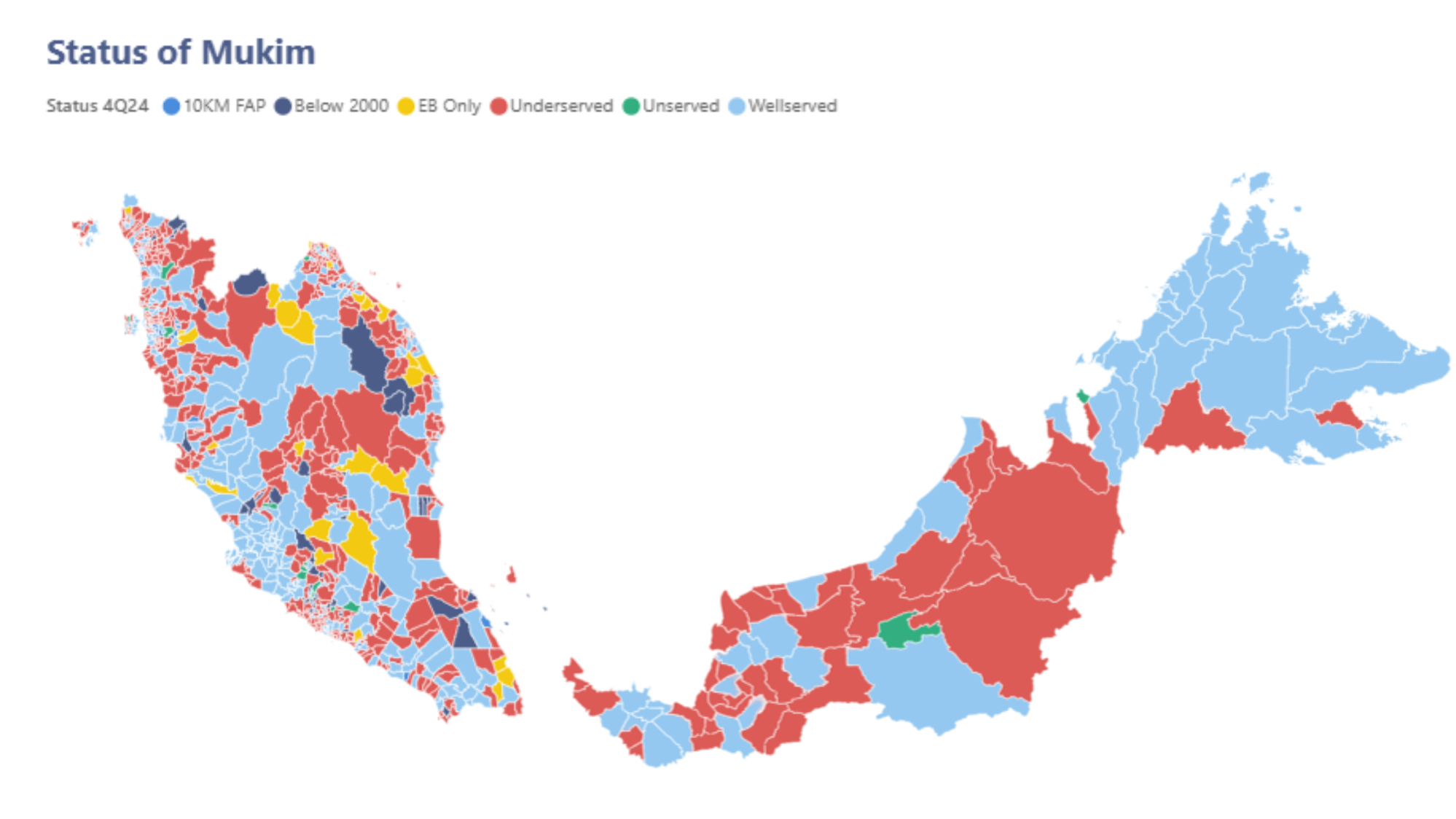
[1] FAPs are locations where individuals can perform basic banking activities, such as cash deposits and withdrawals. This can take the form of a bank branch, an electronic terminal, or an appointed agent.
[2] Mukim is defined as a subdivision of an administrative district.
[3] A mukim with at least one FAP that has cash-in and cash-out functions i.e. a bank branch, agent bank, self-service terminal and mobile bank
Was this page helpful?
Help us improve by sharing your feedback.